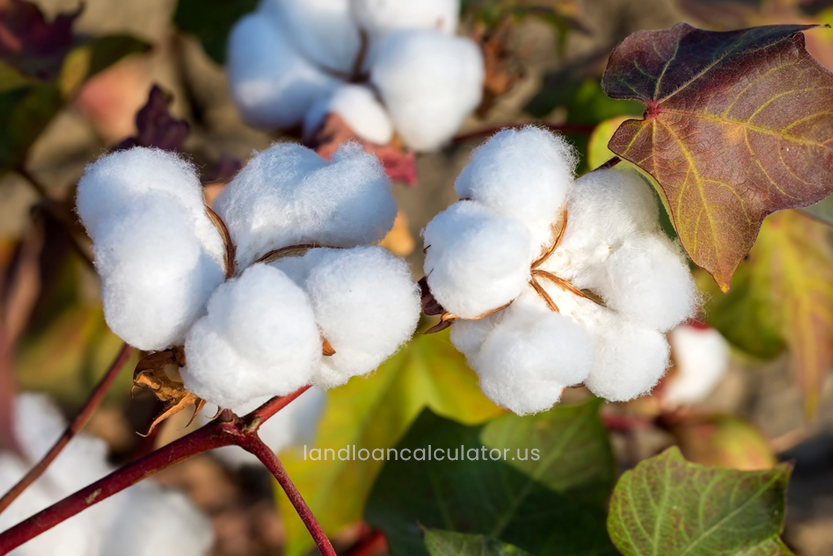
Texas grows more cotton than every other state combined comes close to matching, and it’s why an invasive cotton jassid Alert outbreak in Texas fields carries so much weight beyond just one farm. Millions of acres go in every spring, and once that crop comes off the field it just keeps working – feeding rural towns, keeping textile mills running, filling a good chunk of what gets shipped overseas. That’s exactly what makes a pest like this worth taking seriously before it spreads.
None of that makes the actual farming easy. Talk to a grower who’s been doing this a while and the last few years usually come up as some of the roughest. Water isn’t cheap. Prices swing around in ways that don’t line up with what’s actually happening in the field. Droughts run longer than anyone would like. And there’s a newer worry too – Invasive Cotton Jassid Alert pressure, something a lot of producers barely thought about a few years back. It’s a small bug. You could walk right past one in a field and never know it was there.
This guide gets into what the Invasive Cotton Jassid Alert actually is, why it matters, why Texas keeps topping the national numbers, where cotton grows best across the state, how growers keep pests under control without losing a season to them, roughly when harvest happens depending on the region, what kind of income is realistic, and a few things that genuinely help yield.
What Is the Invasive Cotton Jassid Alert?
Invasive cotton jassid Alert are leafhoppers, and they feed differently than most pests people think of first. A caterpillar chews. A beetle chews. Jassids pierce the plant and pull sap out from the inside, so there’s no obvious bite mark or hole to spot walking by. That’s really the whole issue with them – the damage doesn’t announce itself.
A field can look completely fine for weeks while jassids work underneath the surface the whole time. By the time it shows, part of the damage already happened, and there’s no undoing that part. Extension agents bring this up more now, growers too, mostly because heat speeds everything up. A field that looks normal in June can be a different story by mid-July once temperatures climb.
What the Damage Looks Like in the Field
The young leaves and the new growth on the plants are affected first because that is where the nutrients are. When the plants are fed much it stresses the plants it slows down the photosynthesis and over time it reduces the number of healthy cotton bolls the plants can produce. You will see the edges of the leaves curling up the margins of the leaves turning yellow or reddish the tips of the leaves looking like they have been. The plants will just stop growing instead of growing on schedule. The young leaves and the new growth are very sensitive, to this. Bolls drop off. Leaves fall earlier than they should.
By harvest a grower dealing with a real infestation is often looking at weaker lint, less fiber strength, and a yield that’s smaller than what they were counting on going into the season.
Why Catching It Early Matters So Much
Walking fields on a regular basis rather than waiting for something obvious is probably the most useful single habit a grower can pick up here. Young plants right after emergence need extra attention. New leaves too. Field edges, weedy patches, irrigated blocks, anything recently planted – trouble tends to show up in those spots before it shows up anywhere else.
Regular checks give a farmer something real to act on instead of a guess. Usually that means fewer sprays, applied where they’re actually needed, instead of treating a whole field just to feel safe about it.
What Sets Off a Invasive Cotton Jassid Alert Outbreak
There’s a pattern to how these things get started. Hot, dry stretches come first. Weeds left alone along the borders make it worse. Too much nitrogen going down doesn’t help either, and neither does planting cotton on the same ground year after year with nothing rotated in between. Fewer beneficial insects are around which means there are natural checks on how fast the population of these insects grows and scouting that starts too late in the season usually misses the window entirely for the population of these insects.
Knowing this stuff about the population of these insects ahead of time is what lets a grower get in front of the problem with the population of these insects of reacting once the problem, with the population of these insects is already visible. Beyond clothing and household products, cotton is even used to manufacture astronauts space suits.
Integrated Pest Management: Still the Better Route
Most experienced producers lean on IPM now instead of reaching for a sprayer the moment something looks a little off. It keeps pressure down without also taking out the beneficial insects already doing part of that job for free. A program that actually works comes down to a few habits done consistently: scouting every week, getting the identification right the first time, tracking economic thresholds before treating anything, leaving natural predators alone rather than wiping out everything indiscriminately, going easier on irrigation and fertilizer than instinct says to, keeping weeds down along field borders, and spraying only once it’s genuinely called for.
Invasive cotton jassid Alert are one pest among plenty that Texas growers deal with. But how fast they multiply once conditions turn is exactly why they’re worth watching closely. Catch them early, keep the field managed, and most of that potential loss just never happens. In the 1990s the Texas Cotton Producers organization started the Texas Boll Weevil Eradication Plan.
This plan was made to stop the Texas Boll Weevil from hurting the Texas cotton crops. The Texas Boll Weevil was one of the pests that damaged the Texas cotton. It is still very important to keep watching out for the Texas Boll Weevil to make sure they do not come back and cause problems again.
Why Texas Leads the Country in Cotton
Texas didn’t land at the top of the national numbers by accident. It took decades of work, a climate that mostly cooperates, and generations of farmers who kept at it no matter what came their way. In a typical year Texas alone grows more than half the country’s total cotton output – which is a lot for one state to be carrying on its own. Despite being strong in farming industries like beef, hay and corn cotton is still the valuable crop in Texas. In 2024 Texas produced over 4 million bales of Upland cotton which shows that it is still the cotton producing state in the US.
Part of what makes it possible is just how much the land varies here. The Backland Prairies don’t look anything like the wide-open High Plains, and yet both grow cotton well. Add modern equipment and ongoing agricultural research into that mix and Texas keeps its lead in acreage and total output both.
Cotton also builds a whole economy around itself in a way most crops just don’t manage. Every bale moves through seed suppliers, then gins, then warehouses, then truckers, mills, and exporters, long before it becomes anything close to a finished product. That reaches into nearly every small town across rural Texas one way or another.
Why Texas Produces More Cotton Than Anywhere Else
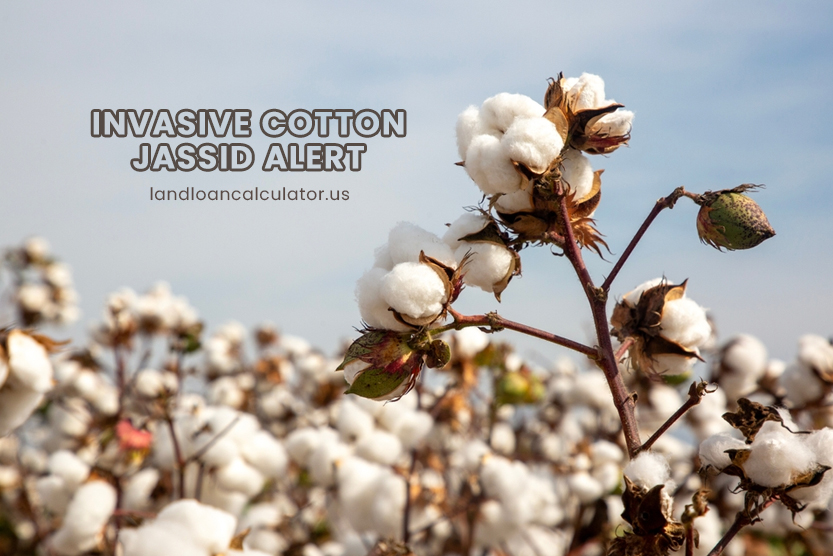
There’s simply an enormous amount of farmable land to start with. Growing seasons run long and sunny. The state has different climate zones and each one is good for growing different kinds of cotton. The system for watering the crops is good. The machines for harvesting are getting better all the time. The universities are helping the cotton farmers by doing research not just guessing. The roads and ports for transporting and exporting the cotton are already there. The families who have been farming this land for a long time have a lot of experience that is hard to learn quickly.
When you put all of these things together you get a state that can keep producing cotton even when the weather, bugs or markets cause problems.
What Invasive Cotton Jassid Alert Means for the Texas Economy
Cotton brings a lot of money into the Texas economy every year. That money keeps moving around long after it leaves the farm. It goes through factories, trucking companies, factories that make things and businesses that export goods. It keeps going even after the cotton has been picked. Cotton is a deal for Texas and it helps many people and businesses. The money, from cotton keeps flowing through the state. It helps to make the Texas economy strong.
A strong harvest year lifts cotton gins first, then textile mills, seed processors, feed companies, oil mills, equipment dealers, freight operators, and exporters, often all around the same time. That’s a lot of jobs riding on a single crop, spread across small towns just as much as bigger cities.
Even the seed doesn’t go to waste. Cottonseed turns into livestock feed, cooking oil, an ingredient in salad dressings, biofuel, industrial lubricants, sometimes even cosmetic products. Since nearly every part of the plant carries some kind of commercial value, farmers pull more profit out of each acre while throwing away less along the way.
Is Cotton Actually a Cash Crop?
Yes, and there’s not much room to argue otherwise. A cash crop gets grown mainly to sell, not to eat at home, and cotton fits that description about as well as any crop can, since it’s raised almost entirely for textile and industrial use. People search this a few different ways – is cotton a cash crop, cotton as a cash crop, what’s considered a Texas cash crop – but however it gets phrased, the answer stays the same. Cotton ranks among the most valuable cash crops grown anywhere in the state.
Unlike a food crop, cotton makes money through several products at once instead of just one. Raw fiber, seed, seed oil, feed, various industrial goods – all off the same plant. That range of uses is a big reason demand stays fairly steady both here and overseas.
Why Cotton Stays Profitable
Costs shift from year to year, sure, but a handful of things keep cotton worthwhile for a grower running a tight operation. Global demand holds up. Export markets stay strong. Byproducts beyond the fiber itself add real value. The processing industry is already well established, and technology has come a long way over the last decade. Seed genetics keep getting better too, and harvest methods have gotten faster and more efficient than they used to be.
Farmers who stay on top of irrigation, pest control, fertilizer, and timing tend to come out ahead financially even in the tighter years.
Cotton Farming in Texas – Where It Grows Best
Texas A&M says that Texas has eight areas where they grow a lot of cotton. These areas are the Panhandle, South Plains, Permian Basin, Trans-Pecos, Rolling Plains, Blackland Prairies, Winter Garden, Coastal Bend and the Lower Rio Grande Valley. Texas cotton is really important. Texas A&M University is talking about these eight major cotton-producing regions, in Texas.
Cotton farming here isn’t limited to any one part of the state. It stretches across the South Plains, the High Plains, the Rolling Plains, the Blackland Prairie, the Coastal Bend, the Winter Garden, the Lower Rio Grande Valley, and the Trans-Pecos, and each one is shaped by its own soil, rainfall, and climate.
Farmers adjust variety selection, planting dates, irrigation methods, and pest strategies depending on which region they’re working in. The South Plains isn’t just the top region in Texas either – it’s the largest cotton-producing area in the entire United States, full stop.
Where the Cotton Fields Actually Sit
Drive through West Texas in late summer and it’s obvious pretty quick why people talk about the cotton fields out there the way they do. Rows stretch out for miles, farther than the eye can really follow, forming one of the more recognizable agricultural landscapes anywhere in the country.
The heaviest concentrations sit around Lubbock, Plainview, Brownfield, Levelland, Lamesa, Seminole, Big Spring, and Snyder. These towns anchor thousands of cotton farms, and plenty of them now run GPS-guided machinery, drone-based monitoring, satellite imagery, and automated irrigation, all built to stretch water further while still pushing yields up.
Cotton Center and the Lubbock Cotton Region
Any real conversation about American cotton eventually circles back around to Cotton Center and the wider Lubbock area. Sitting in the High Plains, this region has become one of the most productive cotton-growing areas in North America. Good soil helped. So did experienced growers and decades of agricultural research built up over time.
Lubbock Cotton Growers works directly with local farmers, sharing research findings, production guidance, pest updates, and educational resources. The Texas Cotton Association operates on a bigger scale, focused more on policy, market awareness, and sustainable practices across the whole state. Combine those groups with Texas A&M AgriLife Extension, and there’s a real support network behind cotton here, one built on actual research rather than trial and error passed down informally.
Hibiscus Jassid vs. Cotton Jassid
Growers and home gardeners mix these two up constantly, and it’s an easy mistake to make. The hibiscus jassid and the one found in commercial cotton fields belong to the same leafhopper family and share similar feeding habits, but they don’t always target the same host plants, and they don’t always cause comparable levels of damage.
The hibiscus variety typically stays on ornamental hibiscus and closely related species. Under the right conditions though, those populations can drift into nearby cotton fields and become a genuine problem there too. Both feed the same basic way – piercing leaves and extracting sap – which weakens the plant, slows photosynthesis, and eventually shows up as lower yield and weaker fiber if it goes unaddressed.
What All Jassids Have in Common
Regardless of which plant they prefer, invasive cotton jassid Alertshare a lot of the same traits. They feed on sap. They target young leaves and tender growth specifically. Leaf edges curl as a result, overall plant vigor weakens, crop growth slows down, boll production drops, and warm weather lets them thrive. They multiply fast once conditions turn in their favor.
Because the damage develops slowly, plenty of infestations go unnoticed until a field already looks rough.
Keeping Infestations From Taking Hold
Prevention beats treatment, and it starts well before populations spiral out of control. Scouting needs to happen weekly, not occasionally. Weeds should get cleared from field edges on a regular basis. Beneficial insects deserve protection rather than getting wiped out alongside the pests they’re helping control. Resistant varieties are worth planting where they’re actually available, and pest numbers should get tracked consistently rather than checked once and forgotten. Spraying should wait until economic thresholds are genuinely met, not before.
Staying ahead of an infestation almost always costs less than treating one after it’s already spread.
When Is Cotton Harvested in Texas?
The honest answer is that it depends. Planting date matters. So does weather, irrigation, variety, and region. Broadly speaking though, harvest begins in late summer and continues through fall.
| Texas Region | Harvest Period |
| South Texas | August – September |
| Coastal Bend | August – October |
| Rolling Plains | September – November |
| High Plains / South Plains | October – December |
Is Cotton Farming Still Worth It in Texas?
Growers ask this more than they used to, and it’s a fair question. Water costs keep climbing. Pest pressure like invasive cotton jassid Alert is a newer variable that didn’t used to factor into the math. Weather swings harder than it did a decade ago. So the real question isn’t whether cotton farming in Texas is hard – everyone already knows it is. The question is whether it’s still worth doing, and whether that holds up over the next ten or twenty years.
The honest answer leans toward yes, but not without adjustment. Texas isn’t losing its edge in cotton anytime soon – the land, the infrastructure, the research backing from places like Texas A&M AgriLife, none of that disappears overnight. What’s changing is how the crop gets managed. Growers who treat pest pressure, water use, and soil health as ongoing work rather than something to fix once a season tend to come out ahead.
So is Texas cotton farming suitable for the future? Mostly, yes – for growers willing to farm a little differently than the previous generation did. The crop itself isn’t going anywhere. The economy built around it isn’t going anywhere either. What’s shifting is how much margin for error a farmer has, and that margin depends heavily on staying ahead of things like pest pressure rather than catching up to them.
Frequently Asked Questions
What does a invasive cotton jassid Alert actually look like?
Small, pale green, wedge-shaped, and easy to miss walking through a field. They’re usually found on the underside of leaves, which is part of why so many infestations go unnoticed until the damage is already visible from a distance.
How do I know if it’s invasive cotton jassid Alert and not another pest?
The tell-tale sign is leaf curling combined with yellowing or reddish edges, without any obvious chew marks or holes. Chewing pests leave visible damage. Jassids pierce and drain sap, so the leaf looks stressed rather than eaten.
Can a invasive cotton jassid Alert infestation be reversed once it starts?
Damage already done to a leaf won’t undo itself, but catching an infestation early stops it from spreading further and protects the rest of the plant’s growth. This is really the whole argument for weekly scouting instead of waiting for obvious symptoms.
Do invasive cotton jassid Alert affect yield even in a mild infestation?
Yes, to some degree. Even light feeding pressure slows photosynthesis and can trim boll count, though the effect is obviously much smaller than a full-blown outbreak. It’s rarely all-or-nothing.
Is spraying always the right response to invasive cotton jassid Alert?
Not necessarily, and this is where IPM matters. Spraying before an economic threshold is actually met often costs more than it saves and can wipe out the beneficial insects already keeping other pests in check. Treatment works best when it’s targeted and timed, not automatic.