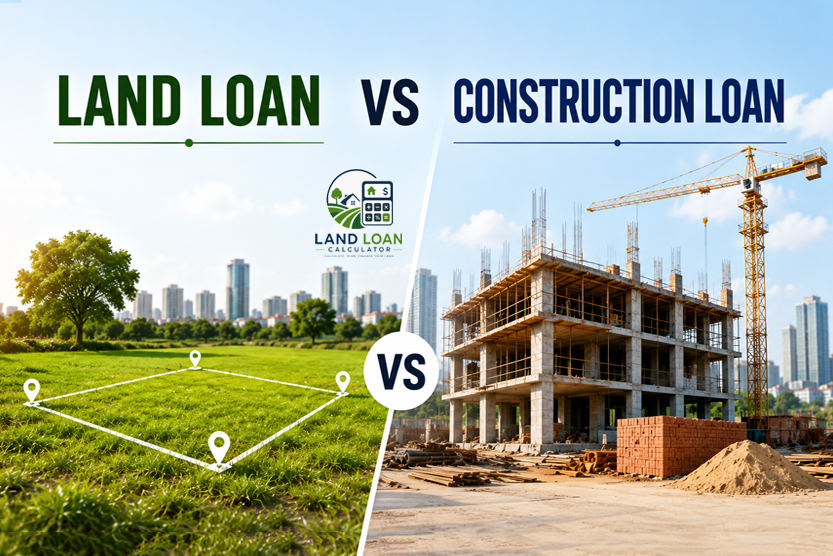
If you’re planning to buy land and build on it, you’ve probably run into two different loan types that sound like they might do the same thing. They don’t. The land loan vs construction loan question comes down to different problems entirely, and picking the wrong one or not knowing the difference going in – can cost you money and time you didn’t need to lose.
Here’s the short version: a land loan gets you the property. A construction loan gets the house built. Whether you need one, the other, or both at once depends almost entirely on your timeline.
What Each Loan Actually Covers (Land Loan vs Construction Loan)
A land loan finances the purchase of the property itself – nothing else. You use it to buy raw, unimproved, or partially developed land, and that’s where the loan’s job ends. If you’re not building right away, this is usually the loan you want.
A construction loan is a short-term loan that covers the cost of actually building a structure – materials, labor, permits, the works. It typically only lasts through the build itself, usually 12-18 months. After that, it either gets paid off or converts into a permanent mortgage once the home is finished.
The confusion usually starts because both loans deal with property that doesn’t have a finished house on it yet. But a land loan assumes you might not build for years. A construction loan assumes you’re building now.
Land Loan vs Construction Loan: Side by Side
| Land Loan | Construction Loan | |
|---|---|---|
| What it covers | Purchase of the land only | Building costs on land you already own or are buying |
| Typical term | 5-20 years | 12-18 months (short-term) |
| Typical interest rate | 7-12% | 6-10%, often variable during construction |
| Down payment | 20-50% | 10-25%, depending on lender |
| Disbursement | Lump sum at closing | Draws released in stages as construction progresses |
| What happens after | Loan continues as-is until paid off or refinanced | Converts to a permanent mortgage or gets paid off |
The disbursement difference matters more than people expect. A land loan hands you the money at closing, same as most loans. A construction loan releases funds in stages called draws tied to specific milestones like foundation completion, framing, and final inspection. That structure protects the lender. It also means you’re not sitting on a lump sum; you’re accessing money as the build actually progresses.
When You Only Need a Land Loan
If you’re buying property with no immediate plan to build, a standalone land loan is almost certainly what you want. This fits buyers holding land for appreciation, farmers or ranchers using the land for agricultural purposes, or anyone who wants to secure a good parcel now and figure out building plans a few years down the road. Still deciding between raw and improved land? See our breakdown of raw land vs improved land loans first, since that choice affects your rate and down payment either way.
A land loan is also the right call if you’re not ready to commit to a builder or a finished set of architectural plans yet. Construction loans typically require detailed plans and a signed contract with a builder before a lender will approve one – land loans don’t demand that. Haven’t found the right parcel yet? Our guide on how to buy land covers the full search process.
When You Need a Construction Loan Instead
If you already own the land – or you’re buying it and starting construction almost immediately – a construction loan funds the actual build. Lenders generally want to see approved building plans, a licensed contractor, and a realistic budget before approving one, since the loan ties directly to a specific building project rather than the land itself.
Many lenders offer what’s called a construction-to-permanent loan. It starts as a construction loan and automatically converts into a standard mortgage once the home is finished. This saves you a second round of closing costs and a second qualification process compared to using two entirely separate loans. The Consumer Financial Protection Bureau has additional guidance on how construction loans and draw schedules typically work if you want to dig deeper before applying.
The USDA Exception: One Loan, One Closing, Zero Down
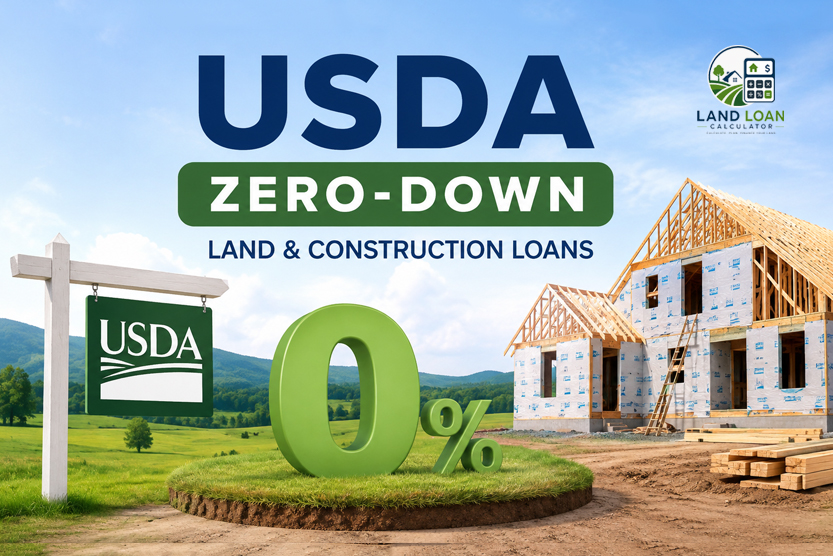
There’s one program worth knowing about before you assume you need two separate loans. A USDA construction loan combines the land purchase, construction costs, and permanent mortgage into a single loan with a single closing. No separate land loan followed by a separate construction loan, and no down payment required at all.
The catch is eligibility. It only covers primary residences in USDA-designated rural areas, requires a USDA-approved contractor, and comes with income limits tied to the area’s median income. It’s not an option for investment properties or land you’re not planning to live on. But for buyers who qualify, it sidesteps the entire land-loan-vs-construction-loan decision by combining both into one product.
For Investors: Which Loan Should Come First?
If you’re developing property rather than building a personal home – particularly in high-growth Texas markets like Dallas, McKinney, Prosper, or elsewhere in the DFW area – the land-loan-first approach is typically standard practice for a reason. Land doesn’t generate income on its own. Lenders view undeveloped land as higher risk than an active construction project with a clear completion timeline and exit strategy.
Securing the land loan first gives investors room to finalize entitlements, zoning approvals, and site planning before committing to construction financing and its shorter, more rigid timeline. Once permits and plans are locked in, moving to a construction loan – or a construction-to-permanent structure for a build-to-rent strategy – becomes a more straightforward underwriting process. The lender is financing a well-defined project at that point, rather than land with an uncertain development timeline.
Can You Use Both Together?
Yes, and for a lot of buyers this is exactly the path that makes sense. Buy the land with a land loan now. Hold it for a year or two while you save, plan, and pick a builder. Then apply for a construction loan when you’re actually ready to break ground. The construction loan at that point can sometimes pay off the remaining land loan balance and roll everything into one new loan covering both the land and the build.
The trade-off is straightforward: buying land first gives you flexibility and locks in a purchase price before land values climb further, but it means paying two sets of closing costs and going through underwriting twice instead of once. Comparing a few land-specialist lenders in Texas before committing to either path can also reveal whether a particular lender offers a smoother path between the two loan types.
If you’re leaning toward buying land now and building later, it’s worth understanding land loan down payment requirements upfront, since that upfront cash commitment is usually the biggest factor in deciding whether to buy now or wait. And if rates shift while you’re holding the land loan before construction starts, refinancing is usually still an option in the meantime.
A Real Cost Comparison
Say you’re eyeing a $60,000 lot and plan to build a $200,000 home on it eventually.
Path 1 – Land loan now, construction loan later: At 35% down on the land loan, you’re financing $39,000 at 9% over 10 years, roughly $494 a month. A year later, you take out a construction loan for the $200,000 build. Once complete, it converts to a permanent mortgage. You’ve paid closing costs twice, but you locked in the land price before it potentially rose.
Path 2 – Buy and build immediately with a construction-to-permanent loan: You finance the land and build together under one loan, one underwriting process, one closing. Simpler, but it requires having your builder and plans locked in before you even close on the land no time to sit on the property and plan.
Running both scenarios through a land loan calculator before committing to either path gives you a real monthly number to compare, rather than guessing.
Common Mistakes Buyers Make
Assuming a land loan automatically covers construction costs later is a frequent one. It doesn’t, and buyers sometimes get caught off guard needing to qualify for an entirely separate loan when they’re ready to build. Underestimating how strict construction loan requirements are is another – lenders want finished architectural plans, a licensed and often pre-approved builder, and a detailed budget before they’ll release the first draw.
It’s also easy to overlook how differently these loans get priced. Comparing a land loan’s interest rate directly to a construction loan’s rate without accounting for the different terms, draw schedules, and risk profiles tends to produce a misleading comparison.
Frequently Asked Questions
Can I get a land loan and construction loan at the same time?
Not typically. Most lenders offer either a standalone land loan or a construction-to-permanent loan. A construction-to-permanent loan combines the land purchase and building costs into one loan. They usually don’t offer both as separate loans at the same time.
Is a construction loan harder to qualify for than a land loan?
Generally yes. Construction loans require approved building plans, a licensed contractor, and a detailed budget. Land loans focus mainly on your credit, down payment, and the property itself.
What happens if I don’t build within a certain time after getting a land loan?
Most standalone land loans don’t require you to build within a specific timeframe. Construction loans are different because they are tied to an active building project. You can hold land financed with a land loan indefinitely, subject to your regular loan payments.
Do construction loans require a down payment on the land too?
Yes, if you’re using a construction-to-permanent loan that includes the land purchase. The down payment usually applies to the total cost of the land and construction, not just the building.
Which loan has a better interest rate?
Lenders price land loans and construction loans differently, so they aren’t directly comparable on rate alone. Construction loans sometimes carry lower headline rates but run short-term and often variable, while land loans typically fix over a longer term.
Bottom Line: Land Loan vs Construction Loan
A land loan and a construction loan aren’t interchangeable – one buys the ground, the other builds on it. If you’re not ready to build, a standalone land loan gives you flexibility. It doesn’t force you to start construction right away. If you’re ready to build now, a construction-to-permanent loan is often the better choice. It saves you a second closing and another underwriting process. Either way, run your specific numbers before committing. These two loan types differ enough in structure that guessing which one costs less rarely gives you the right answer.